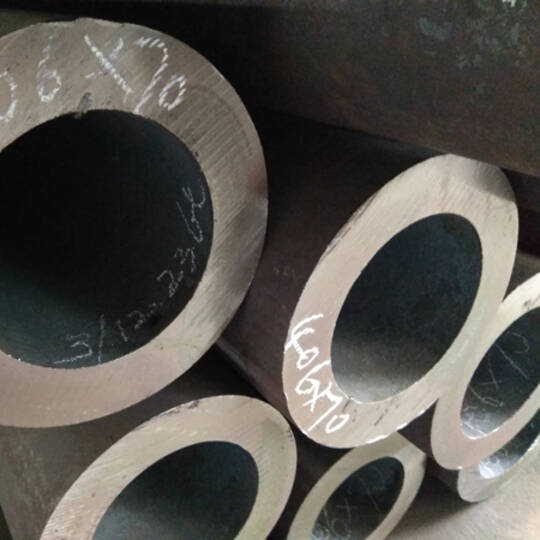
Product Overview
Overview
Carbon steel pipe supplied to ASTM A53 and ASTM A106 covers two widely used specifications for structural, mechanical and pressure piping. Use this summary to choose the right grade for your application and to prepare accurate purchase specifications and RFQs.
Key differences at a glance
-
Scope and intended service:
- ASTM A53 — General-purpose carbon steel pipe available welded or seamless; available as black or hot-dip galvanized; typically used for low- to medium-pressure service, structural applications, water and gas distribution, and mechanical use.
- ASTM A106 — Seamless carbon steel pipe intended for high-temperature and high-pressure service (commonly specified for temperatures up to about 750°F / 400°C); typically used in refineries, boilers, power plants and other high-temperature systems.
-
Manufacture:
- A53 can be supplied as welded (ERW/SAW) or seamless depending on ordering; includes coated (zinc) finishes.
- A106 is specified as seamless only.
-
Chemical and metallurgical considerations:
- A106 grades are formulated for improved heat resistance and tighter control of elements important for high-temperature performance (for example, silicon is commonly included where required for heat resistance).
- A53 is a general-purpose specification and may have broader composition tolerances.
-
Typical mechanical properties (minimums commonly referenced):
- ASTM A53 Grades A/B/C — tensile strength (min) ~48,000–60,000 psi (330–415 MPa); yield strength (min) ~30,000–35,000 psi (205–240 MPa) depending on grade.
- ASTM A106 (seamless) — tensile strength (min) typically ~48,000–70,000 psi (330–485 MPa) across grades; yield strength (min) ~30,000–40,000 psi (205–275 MPa) depending on grade.
Typical applications
- Choose ASTM A53 when you need economical piping for low/medium pressure service, structural uses, water/gas distribution lines, or when galvanized finish is required.
- Choose ASTM A106 when the service involves elevated temperatures and pressures such as refinery piping, superheater/reheater lines, boiler tubes and high-temperature process lines.
Ordering and specification tips for B2B procurement
- Always specify: ASTM standard (A53 or A106), grade (A/B/C or 1/2/3 where applicable), seamless vs welded, OD and wall thickness (or schedule), length (single/random), end finish (plain cut, bevelled, threaded), and any required heat treatment or NDT/hydrostatic testing.
- If corrosion resistance or external protection is required, request galvanizing or additional coatings (A53 typically offered hot-dip galvanized; A106 is usually bare and may require external coating).
- Request mill test certificates (MTC/EN10204 3.1/3.2) and specify any required supplementary tests (flattening, hardness, PMI) for critical service.
This comparison helps you match the right carbon-steel piping specification to the application. For quotations, include the exact standard, grade, manufacture method (seamless/welded), sizes and required certificates to speed supplier responses.
Product Details
- Brand
- BBN Steel
- Country of origin
- China
- Industrial sector
- Metallurgy
- Unit type
- Metric Ton
Supplier

- Address
-
China


