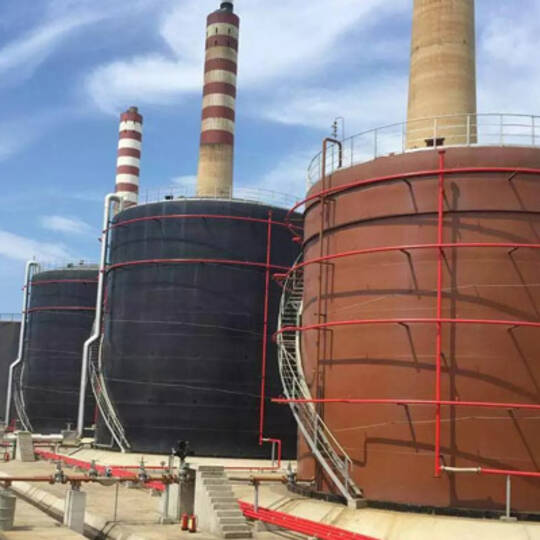
Product Overview
Both API 620 and API 650 are widely used American Petroleum Institute standards that govern the design and construction of welded steel storage tanks. Use this comparison to determine which standard fits your project requirements and to understand the principal technical differences.
Key differences
-
Service envelope
- API 650: Intended for atmospheric and low-pressure tanks (internal pressure not exceeding 2.5 psig). Commonly used at terminals, refineries, pipeline facilities and general oil storage.
- API 620: Intended for large welded low-pressure tanks that require higher internal pressure capability (up to ~15 psig) or lower-temperature service than API 650 covers.
-
Temperature range (typical design guidance)
- API 650: Standard temperature range commonly applied from about -40°F to +500°F (use appropriate material selection for extremes).
- API 620: Covers colder and broader ranges where low-temperature properties are critical; typical published ranges extend to very low temperatures (example figures used in planning are as low as -325°F up to about +250°F).
-
Typical applications and sizes
- API 650: Most carbon, stainless steel and aluminum tanks used in storage terminals, refineries and process plants — generally for atmospheric/low-pressure storage.
- API 620: Selected when tanks are exceptionally large (examples include tanks with very large diameters or volumes) or when higher internal pressure/low-temperature service rules out API 650.
-
Design & construction focus
- API 650 emphasizes economical welded tank construction for atmospheric service with standard shell and roof assemblies.
- API 620 provides additional requirements for low-temperature properties, more robust design for higher internal pressures, and for certain large-diameter constructions.
Selection checklist (practical steps for B2B procurement)
- Define stored product properties: vapor pressure, flash point, density, compatibility with steel grades, and required storage temperature.
- Establish design pressure and vacuum conditions: choose API 650 for ≤2.5 psig atmospheric/low-pressure service; choose API 620 when design pressure exceeds 2.5 psig or low-temperature service is required.
- Confirm tank geometry and capacity: very large diameters or special roof types may favor API 620 provisions.
- Select materials and welding procedures: consider carbon steel, stainless steel or aluminium per product compatibility and temperature limits; ensure material traceability and impact-testing where required.
- Verify testing & inspection needs: hydrostatic testing, non-destructive weld inspection, radiography, and any leak/pressure testing as required by the chosen standard and local regulations.
- Check regulatory and site-specific requirements: local codes, seismic design, wind loading, foundation and containment considerations.
Why choose our supply capability
We manufacture welded steel storage tanks to meet either API 650 or API 620 requirements and can size, specify materials, and design testing regimes to match your stored product and site needs. We supply tanks in a range of capacities and can support engineering review to recommend the appropriate standard and construction approach for your application.
For specification-driven projects, provide the stored product data, required capacity, design temperature and pressure, and any site constraints so we can prepare compliant fabrication and inspection proposals.
Product Details
- Brand
- BBN steel
- Country of origin
- China
- Industrial sector
- Construction
- Unit type
- Metric Ton
Supplier

- Address
-
XICHENG SCIENCE & TECHNOLOGY BUILDING , JINSUO ROAD
Zhengzhou Shi
Henan Sheng, 450001
China - Telephone
- Available


