Product Overview
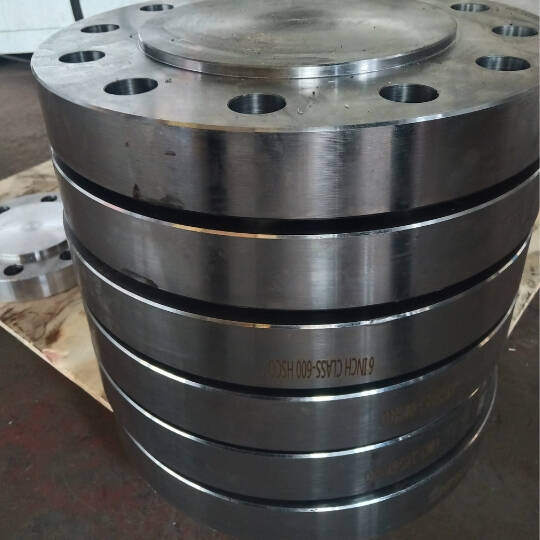
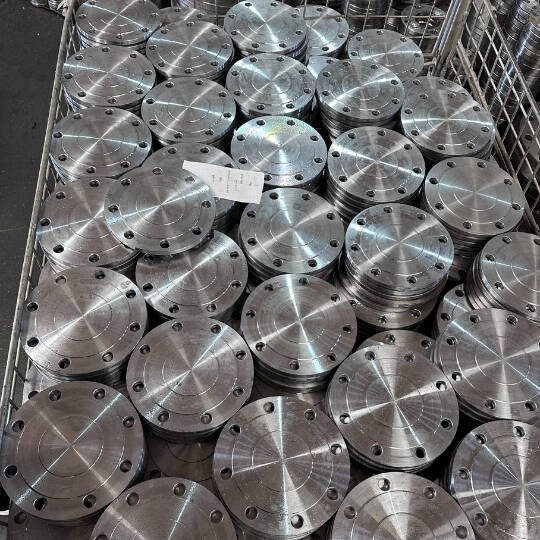
A blind flange provides a secure, removable closure for the end of a pipeline. Designed to mate with a matching welded-neck or slip-on flange and fastened with bolts or stud bolts and nuts, it enables temporary or permanent truncation of a line while allowing straightforward removal for inspection, cleaning, maintenance or pressure testing.
Key features
- Removable bolted closure that isolates pipe ends without flow-through
- Compatible with standard flanges (e.g., welded-neck) using bolts/stud bolts and nuts
- Allows rapid access for maintenance, cleaning, inspection and pressure tests
- Manufactured to established dimensional and pressure standards for interchangeability
Standards and quality
Produced to common industrial flange standards (examples: ASME B16.5 / B16.47, ANSI B16.5, DIN 2573, JIS B2220) to ensure dimensional compatibility and pressure rating consistency across piping systems.
Typical applications
- Pipeline end capping and system isolation
- Temporary closures during commissioning or repairs
- Access point for hydrostatic or pneumatic testing
- Service or shutdown points in oil & gas, petrochemical, power, water treatment and general industrial piping
Ordering guidance (specify to ensure correct supply)
- Material (e.g., carbon steel, stainless steel or alloy) and grade
- Nominal pipe size (NPS or DN) and schedule or wall thickness
- Pressure rating or class (e.g., ASME class/PN)
- Face type (raised face, flat face, ring-type joint) if required
- Bolt hole pattern / flange standard (ASME, DIN, JIS etc.)
- Quantity and any required inspections or certifications (NDT, material test certificates)
If you need custom machining, special materials, or certification documents, provide detailed specifications so the supplier can confirm compliance with your project requirements.
Product Details
- Country of origin
- United States
- Industrial sector
- Machinery and equipment
- Estimated HS Code
- HS 730721: Other, of stainless steel - Flanges
Supplier

- Company
- HUNAN BALING STEEL CO.,LTD
- Address
-
Cangzhou Shi
Hebei Sheng
China - Telephone
- Available


