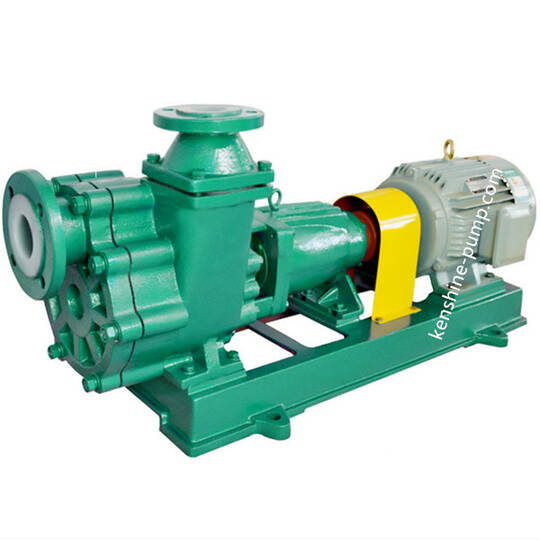
Product Overview
A corrosion‑resistant self‑priming pump retains liquid in the pump chamber after shutdown so it normally re-primes on restart without adding liquid. Most models include an internal inlet/check valve that prevents backflow, making a separate bottom (foot) valve optional for many applications.
Key benefits and installation guidance:
- Built-in check valve: The pump chamber holds liquid after shutdown, which avoids repeated manual priming and reduces downtime.
- Bottom valve as a recommended backup: Installing a foot/bottom valve improves reliability by providing a second non-return device in case the internal check valve fails. This reduces the risk of air ingress and idle running.
- Required in challenging suction conditions: A bottom valve is strongly advised when suction lift is large, the suction piping diameter or volume is large, or the volume of fluid in the suction line exceeds the pump chamber’s storage capacity. In these cases the pump may not self-prime reliably without a bottom valve.
- Especially useful for small pumps: Smaller corrosion‑resistant self‑priming pumps sometimes omit an internal one‑way valve and depend on transient vacuum for priming. A bottom valve materially improves suction performance for these units.
- Practical considerations: When adding a bottom/foot valve, include a suitable strainer to block debris, select valve materials compatible with the pumped fluid, size the valve to match the suction piping, and account for the small additional head loss and maintenance access.
Recommendation: For most standard installations the pump’s internal check valve provides satisfactory self‑priming. Add a bottom valve when you need enhanced reliability, longer suction runs, higher lifts, or when using small pumps without internal check valves. For final selection and sizing, consult the pump technical manual or an application engineer to match valve type, materials and sizing to your fluid and system layout.
Product Details
- Brand
- kenshine-pump
- Country of origin
- China
- Industrial sector
- Machinery and equipment
- SKU
- SET
- GTIN/EAN
- 841370
- MPN
- FZB
- Model
- FZB
- Unit type
- Set
- Minimum order (MOQ)
- 1
- Estimated HS Code
- HS 841370: Other centrifugal pumps
Supplier

- Company
- Kenshine Pump Mfg Co. , Ltd
- Address
-
Yindu Road 1535,Minhang District,Shanghai,China
Minhang Qu
Shanghai Shi, 215600
China - Telephone
- Available


