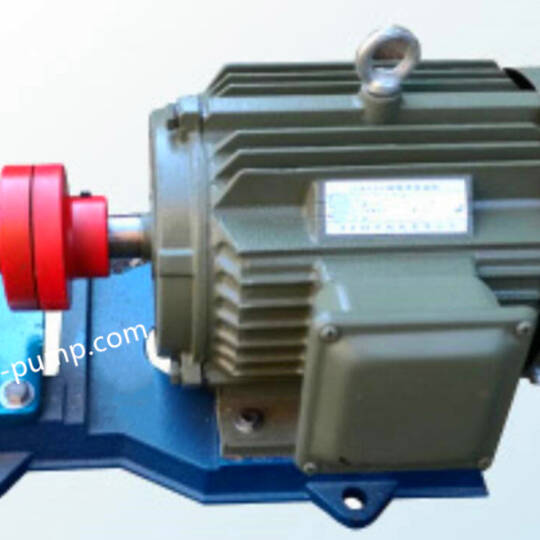
Product Overview
Compact, heavy-duty rotary gear pump engineered for reliable transfer of heavy oils and other low-impurity, low-lubricity liquids. The pump uses a hard-tooth-surface gear set, self-sealing lubrication and an automatic clearance-adjustment design to extend service life and reduce maintenance. Flow-path components are manufactured from high wear‑resistant materials to withstand abrasive non-metallic contaminants and provide 2–10× longer operating life than typical gear pumps in comparable applications.
Key features
- Hard-tooth-surface gears for improved wear resistance and long life
- Self-sealing lubrication and automatic clearance adjustment for consistent performance and reduced leakage
- Wear-resistant flow parts designed to handle particulate-laden, non-metallic impurities
- Compact construction with good self-priming capability and high volumetric efficiency
- Direct interchangeability with KCB-series common gear pumps (same external dimensions, installation footprint and technical parameters)
Technical limits and operating parameters
- Maximum liquid temperature: 200 °C
- Maximum viscosity: 150 mm2/s (cSt)
- Accepts non-metallic impurities up to 3 mm (do not use with metallic particles)
- Designed for continuous operation and stable discharge pressure
Typical applications
- Transfer and boosting of heavy oil, diesel, coal tar, lubricants and food-grade oils (where compatible)
- Fuel transfer and injection supply in burner and combustion systems
- Chemical processing, building materials, daily-chemical production lines, and grain/oil processing where fluids have limited abrasives
Exclusions and cautions
- Not suitable for highly corrosive liquids
- Do not use with media containing metal impurities or abrasive particles larger than 3 mm
- Unsuitable for highly volatile, low‑flash‑point fuels such as gasoline or aromatic solvents (benzene)
This pump is intended for industrial users who need a robust, long-lived gear pump that fits KCB-series installations while offering superior abrasion resistance and long-term pressure stability.
Product Details
- Brand
- kenshine-pump
- Country of origin
- China
- Industrial sector
- Machinery and equipment
- SKU
- SET
- GTIN/EAN
- 841360
- MPN
- ZYB
- Model
- ZYB83.3
- Unit type
- Set
- Minimum order (MOQ)
- 1
- Estimated HS Code
- HS 841360: Other rotary positive displacement pumps
Supplier

- Company
- Kenshine Pump Mfg Co. , Ltd
- Address
-
Yindu Road 1535,Minhang District,Shanghai,China
Minhang Qu
Shanghai Shi, 215600
China - Telephone
- Available


